


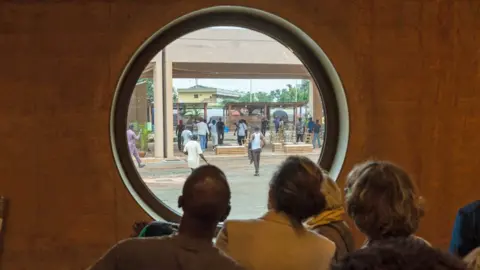
The nation's stunning new Art Museum of West Africa (Mowaa) has found itself in the center of area political conflicts during the time it was scheduled to – but failed – to open its doors to the visitors for the initial occasion.
The Major Initiative
The 15-acre complex is located in the core of Benin's urban center, capital of the southern state of Edo – and features an excavation site and structures created by renowned dual heritage architect Sir David Adjaye, best known for the National Museum of African American History and Culture that began operations in the US capital in 2016.
It has been 60 months in the making – and is designed to celebrate both the past and the modern times of artistic expression in the area renowned for the cultural artifacts, artworks taken from the royal palace by UK forces in the 1800s.
Setup and Prospects
It is notable – and before the anticipated opening, Mowaa was active with employees determined to demonstrate it is a place that can match established museums and galleries in the Western world.
Inside art restorers precisely revealed artworks from safety materials, examining each piece and taking meticulous records before arranging them on exhibition areas and plinths.
Technicians calibrated environmental controls. In the research lab, officers calibrated instruments intended to conserve ancient objects.
Funding and Economic Goals
The project has been the idea of investor Phillip Ihenacho – presently Mowaa's managing director.
"I want us to have a substantial financial effect on area populations in this region," he told media outlets, noting that he aspired to make the city "an arts hub."
Mowaa, a not-for-profit Nigerian institution, sees itself establishing in excess of 30,000 employment opportunities and contributing over $80m per year to the local cultural industry through partnerships and programming.
Financial Support and Government Issues
It has taken $25m to achieve this stage – money gathered from multiple contributors, including the French and German governments, the British Museum and the local administration.
But currently the local government has withdrawn support from beneath it – revoking the use of the site on which the building was erected.
An government communicator explained this was because in the early agreements it had identified as the Edo-named institution – and it had subsequently dropped "the regional name" from its name.
Demonstrations and Government Action
This announcement came after protests on the weekend, when activists invaded the complex demanding it be called the Royal Benin Museum.
A rowdy assembly insulted foreign guests at the venue ahead of the launch – requiring them to be escorted out under security protection.
President Bola Tinubu has also intervened to attempt to settle the dispute, setting up a high-level committee to manage the situation.
Administrative Challenges
But in what way has this evolved into so controversial – and such a reputation problem?
A great deal of it stems from local power struggles at a local state level, as it was the former state leader Godwin Obaseki – whose administration finished recently – who was a key supporter of the project.
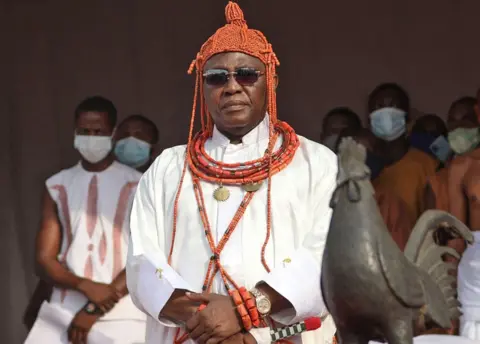
And it seems the leadership of the current leader, a key associate of the local traditional ruler, called the royal figure, may want more of a stake in the initiative. The activists on Sunday, for instance, were insisting that the institution be positioned under the supervision of Oba Ewuare II.
The Historical Objects Discussion
This highlights the controversial matter of the cultural artifacts, one of Africa's most renowned artistic heritage.
Because although the museum does eventually welcome visitors, these artifacts will be conspicuously absent.
They are metal, elephant tusk and wooden artworks that once embellished the royal palace of the ancient kingdom before UK forces looted them in the late nineteenth century during a military operation.
Today, many remain scattered across museums in Western nations -- such as the London museum, European center and the Metropolitan Museum of Art.
Restitution Efforts
Their homecoming has become one of the most contested conversations in the international art community. Roughly 150 have presently been returned – and additional are due to follow.
When ideas for the institution in the urban center were initially revealed in recent years, the key players on the country's cultural sector anticipated it would become their natural home – a state-of-the-art complex to exhibit them to the world.
But the issues became confused recently after the national authorities announced that the royal leader would be the proper guardian of returned objects – and the palace pushed for a facility under the king's authority, opposing the desires of the ex-leader.
Strategic Positioning
This left Mowaa in a challenging circumstance: expressing a definite position on restitution while being careful on custodianship – and stressing its wider mission, which led to|c


